







How Smart Grids Enhance Energy Efficiency: Key Mechanisms and Benefits

Electricity grids built in the 20th century were engineered for a world of predictable, centralized power generation. Today, that world no longer exists. The rise of rooftop solar, electric vehicles, variable demand patterns, and tighter carbon targets has forced a fundamental rethinking of how power is delivered and managed. The smart grid is the answer that utilities and energy planners have been deploying at scale — and understanding how it works reveals why it represents such a meaningful shift in how efficiently electricity can be used.

What Is a Smart Grid?

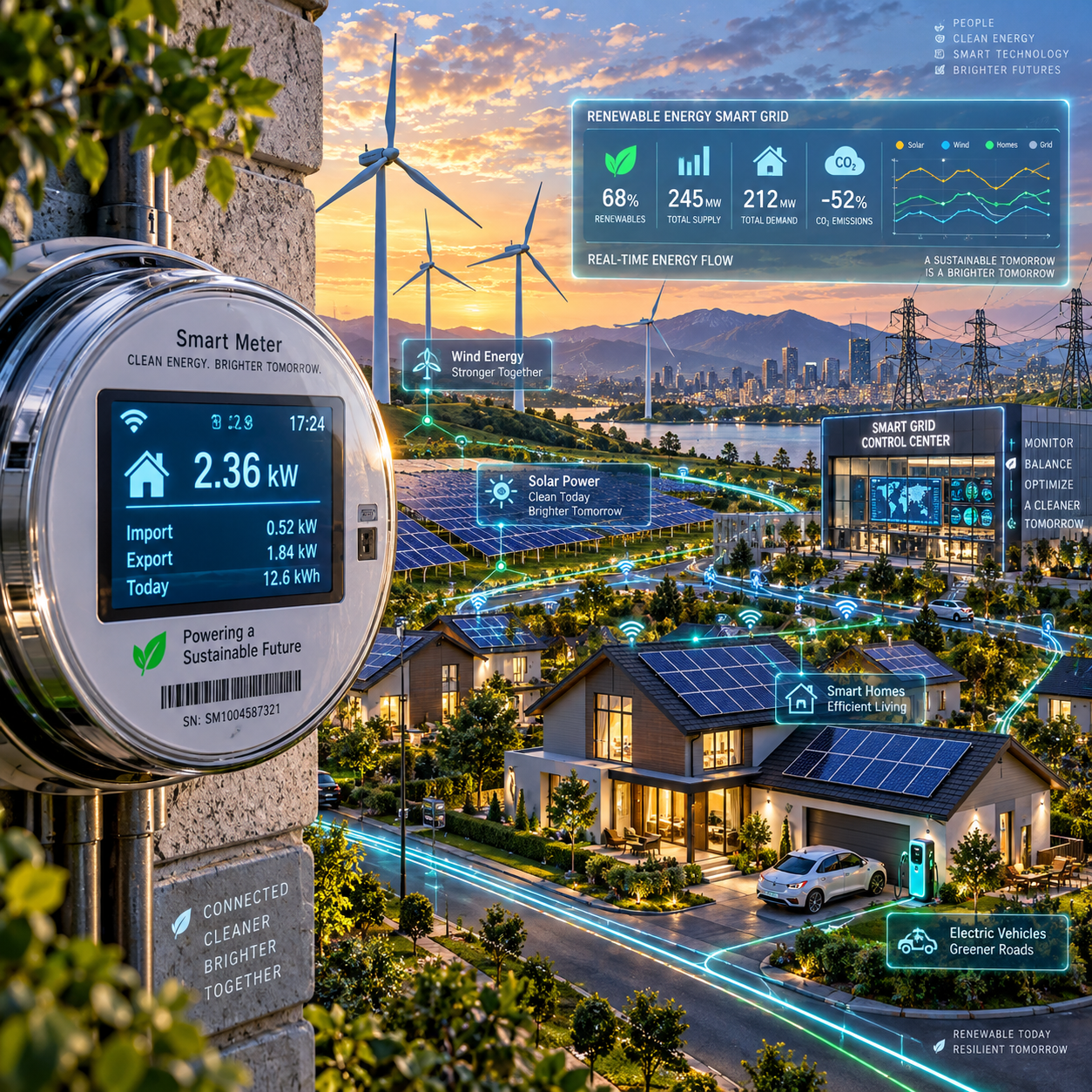
A smart grid is an electricity network that uses digital communication technology, sensors, and automated controls to monitor and manage the flow of power from generation to consumption. Unlike the traditional grid, which pushed electricity in one direction — from power plant to consumer with limited visibility — a smart grid enables two-way communication and two-way energy flow throughout the entire system.

The traditional grid was essentially blind. Utilities had little real-time visibility into what was happening beyond their major substations, which meant inefficiencies were invisible until they caused a problem. Outages were detected when customers called in. Demand spikes were managed through blunt instruments like spinning reserves — generators kept running at partial load just in case.

A smart grid replaces that reactive model with a system that sees, responds, and adapts continuously. Energy data analytics, automated switching, and intelligent devices at every level of the network work together to reduce waste, prevent failures, and accommodate new types of energy resources. It is not a future concept — utilities across the US, Europe, and beyond have been deploying smart grid infrastructure for over a decade.

The Role of Two-Way Communication in Grid Intelligence

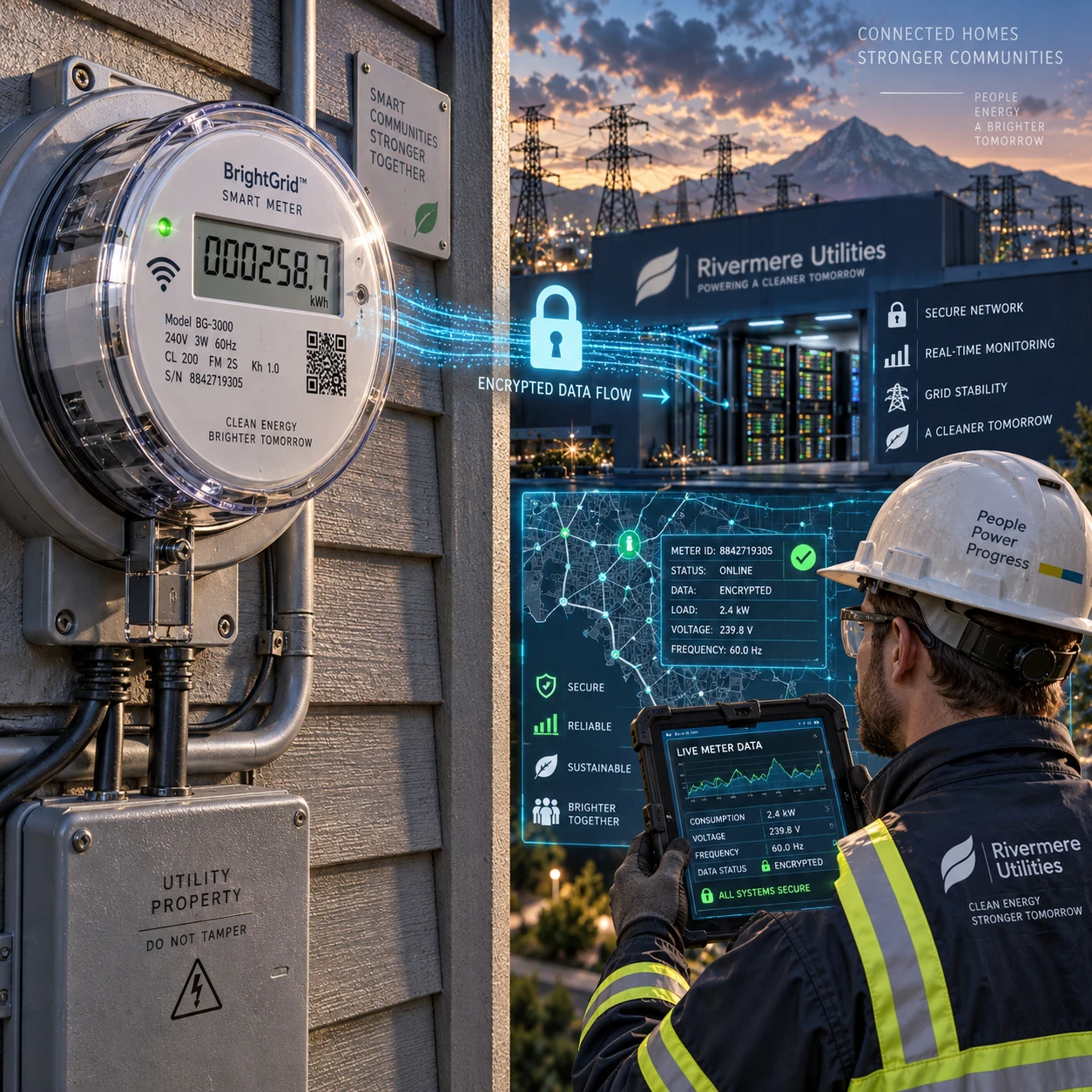
Two-way communication is the foundational capability that makes a smart grid intelligent. It allows real-time data to flow continuously between utilities, smart meters, grid sensors, and connected devices — enabling decisions that a traditional grid simply cannot make.

In a conventional setup, a utility knows how much power it is generating but has limited insight into exactly where demand is surging, where voltage is dropping, or whether a distribution line is approaching its thermal limit. With smart grid infrastructure, sensors throughout the transmission and distribution network feed constant telemetry back to control systems. That data flow transforms grid management from scheduled guesswork into dynamic optimization.

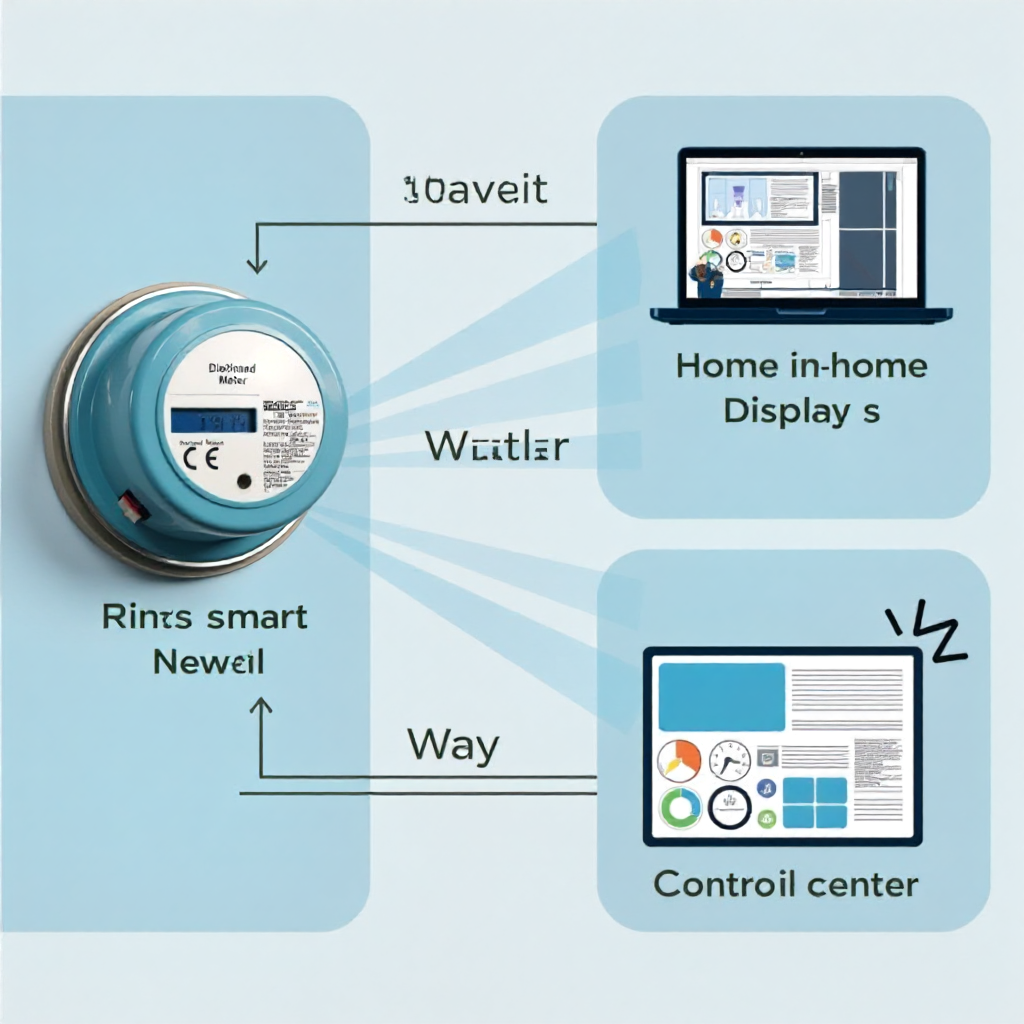
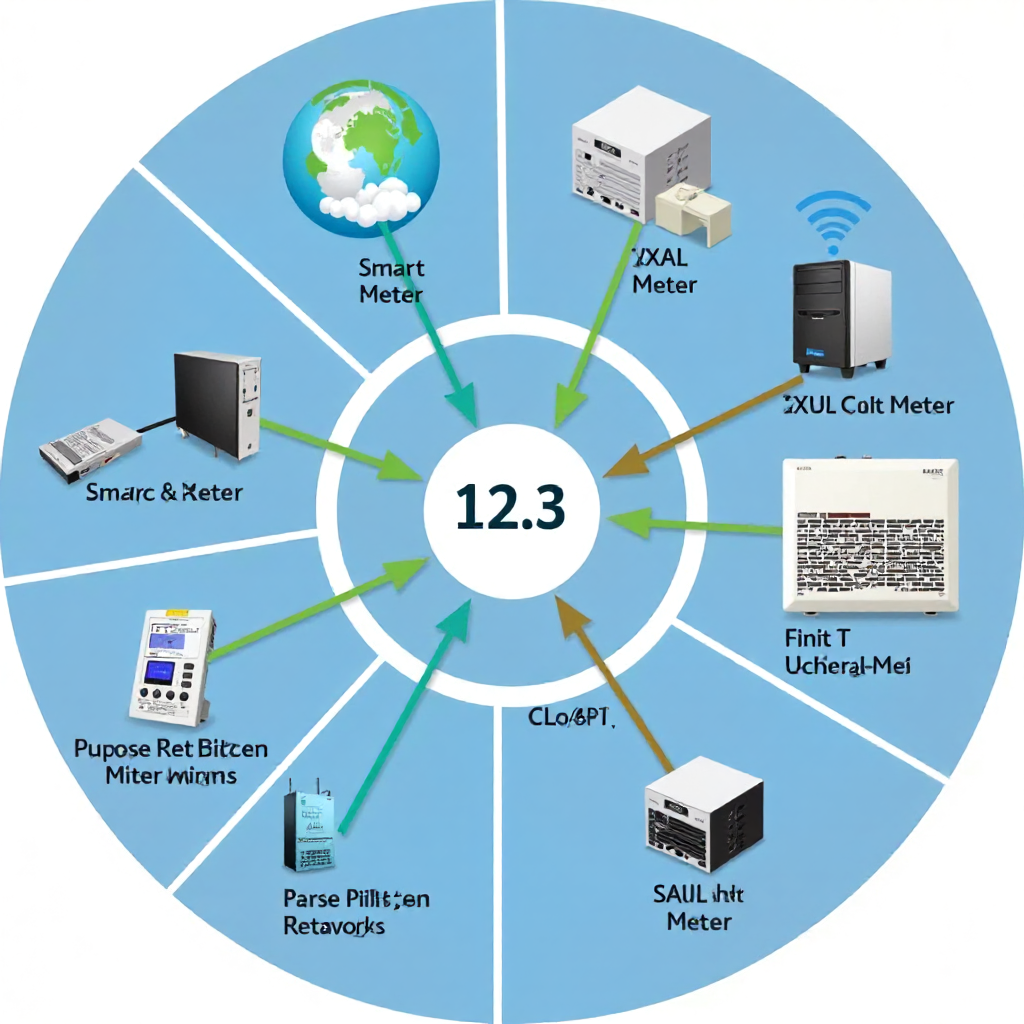
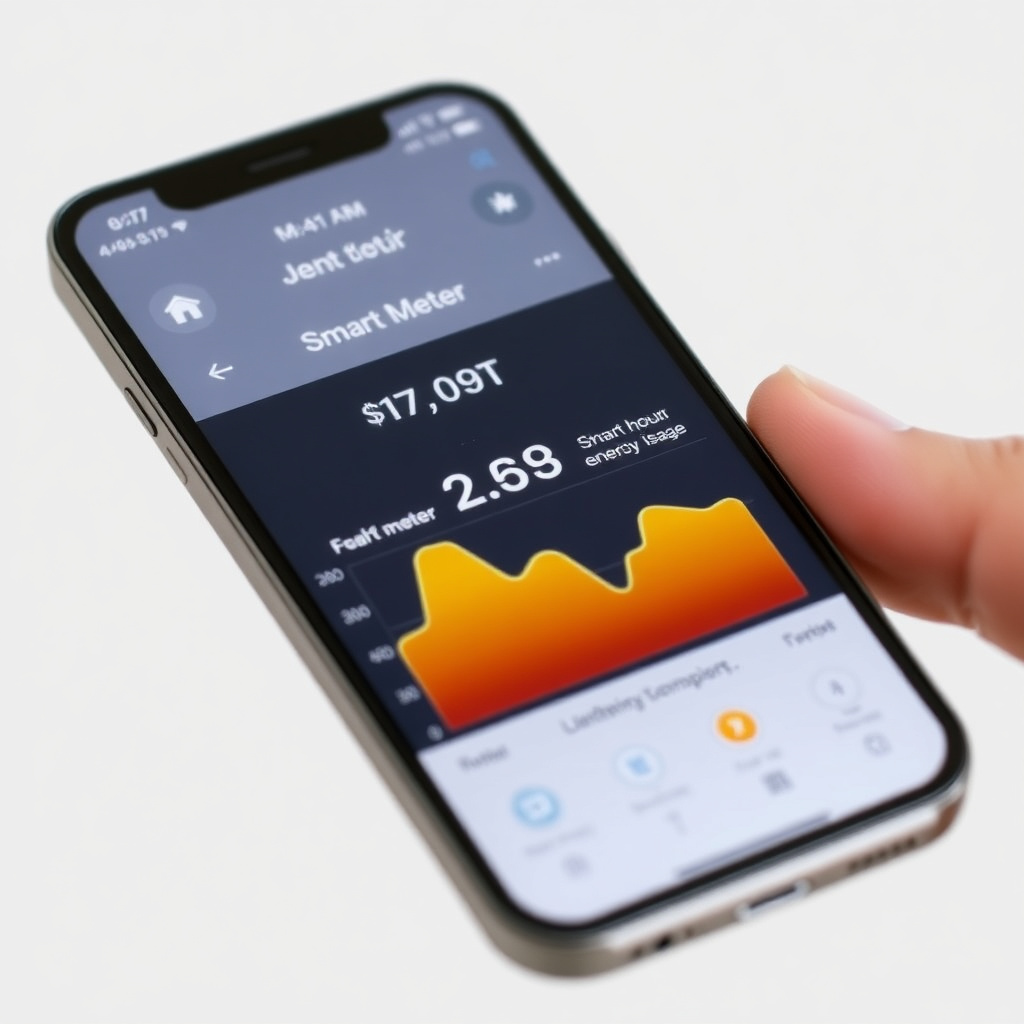
At the consumer end, smart meters are the primary communication node. They report consumption data at intervals as short as 15 minutes, receive pricing signals from the utility, and in some deployments can relay commands to controllable loads like water heaters or EV chargers. This bidirectional channel is what connects household behavior to grid-level decisions — and it is the thread running through almost every efficiency gain that smart grids deliver.

The communication infrastructure itself typically relies on a mix of technologies: advanced metering infrastructure (AMI) networks, fiber backhaul, cellular connectivity, and in some cases mesh radio networks. The specific mix matters less than the outcome: persistent, reliable data exchange that makes the entire grid legible in real time.

How Smart Meters Enable Efficiency at the Consumer Level

Smart meters contribute to energy efficiency by giving consumers accurate, timely information about their consumption — and by enabling pricing structures that reward efficient behavior. Without a smart meter, a household receives a monthly bill based on an estimated or manually read total. With one, consumption data is granular enough to identify patterns, waste, and opportunities.

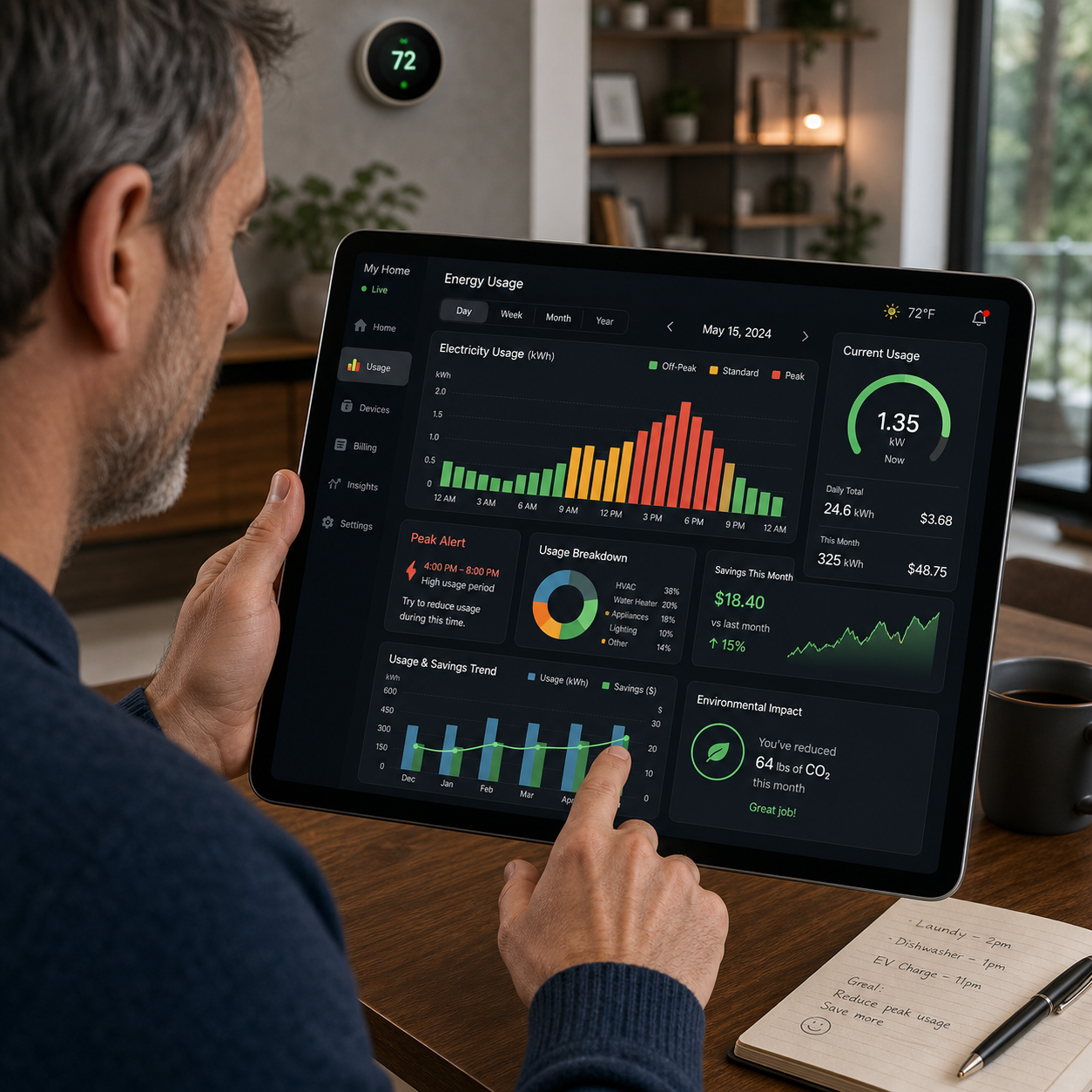
The behavioral impact of visibility is well-documented. Consumers who can see near-real-time consumption data through utility portals or in-home displays tend to identify and eliminate waste they were previously unaware of — a device left on standby, a heating schedule that runs longer than needed, an appliance drawing unexpected power. These are small changes individually, but across millions of households they add up to measurable load reduction.

The bigger lever is time-of-use pricing. When smart meters can record consumption by time interval, utilities can charge different rates at different times of day — higher during peak demand, lower when the grid has surplus capacity. This incentivizes consumers to shift discretionary loads like dishwashers, laundry, and EV charging to off-peak hours. The result is a flatter demand curve, which means less need for expensive peaking capacity and lower overall system stress.

For businesses, smart metering data supports more sophisticated energy management. Detailed interval data enables demand charge analysis, identifies equipment anomalies through unexpected consumption spikes, and provides the input layer for energy management systems that automate load control. A facility manager who previously reviewed monthly utility bills is now working with hourly data that turns energy from a fixed cost into a manageable variable.

Demand Response: Balancing Supply and Demand in Real Time

Demand response is a set of programs that allow utilities to reduce or shift electricity consumption during periods of peak demand or grid stress — typically by adjusting prices or sending direct control signals to enrolled customers. It is one of the most direct ways smart grids cut energy waste at the system level.

The core problem demand response solves is the peak load problem. Electricity demand is not constant — it spikes on hot summer afternoons when air conditioning runs hard, and drops in the early morning hours. Meeting that peak requires generation capacity that sits idle most of the year. Building and maintaining that peaking capacity is expensive and carbon-intensive. Reducing the peak even modestly can defer or eliminate the need for additional generation infrastructure.

Smart grid infrastructure makes demand response practical at scale. Utilities can send price signals or direct load control commands through the AMI network to thousands of enrolled customers simultaneously. A demand response event might temporarily raise the thermostat setpoint by two degrees in participating homes, pause a commercial HVAC cycle for 15 minutes, or delay industrial process loads. Individual impacts are small and largely imperceptible. Aggregated across a large enrollment base, they can shift tens or hundreds of megawatts of load within minutes.

Automated demand response — where customer equipment responds directly to grid signals without human intervention — is the more powerful evolution. Connected thermostats, smart water heaters, and battery storage systems enrolled in demand response programs can respond faster and more reliably than manual processes. The US Department of Energy has noted demand response as a critical tool for grid reliability as variable renewable generation increases. More information on national demand response frameworks is available through the US Department of Energy's Office of Electricity.

Integrating Renewable Energy and Distributed Resources

Smart grids are essential infrastructure for high penetrations of renewable energy. Solar and wind generation are variable by nature — output fluctuates with weather and time of day — and the traditional grid was not designed to handle that variability at scale.

The challenge with distributed energy resources (DERs) like rooftop solar, small wind installations, and battery storage is that they inject power into the distribution network from many unpredictable points. A grid without intelligent monitoring and control can experience voltage instability, frequency deviations, and curtailment — wasted generation that had to be turned off because the grid couldn't absorb it. All of that curtailed renewable energy represents both an efficiency loss and a missed carbon reduction.

Smart grid controls address this through real-time visibility into DER output, automated voltage regulation, and coordination between distributed assets. When a cloud passes over a solar-heavy neighborhood and output drops suddenly, smart grid systems can respond within seconds — adjusting voltage support, signaling demand response, or dispatching battery storage — to maintain stable supply. This kind of dynamic management is what allows renewable penetration to increase without compromising reliability.

The integration of electric vehicles adds another layer. EVs are simultaneously a significant new load and a potential distributed storage resource. Smart grid infrastructure, combined with smart charging protocols, allows EV charging to be scheduled during periods of high renewable generation — effectively using vehicles as demand-flexible loads that absorb surplus clean energy rather than forcing curtailment.

Reducing Transmission Losses and Detecting Faults Faster

Smart grids reduce energy losses in the transmission and distribution network through continuous monitoring, optimized power flow, and faster fault response. These are efficiency gains that happen entirely within the grid infrastructure, before electricity ever reaches a customer.

Transmission and distribution losses are a persistent feature of any electricity network — resistance in lines, transformer inefficiencies, and reactive power losses mean that a meaningful percentage of generated electricity is lost before it reaches end users. Estimates from the US Energy Information Administration place US transmission and distribution losses at roughly 5% of total generation. Smart grid technologies help reduce these losses by enabling dynamic optimization of voltage levels and reactive power compensation across the network, keeping operating conditions closer to their efficient design points.

Automated fault detection is the other major efficiency driver. In a traditional grid, a fault on a distribution feeder might cause a widespread outage that persists until a crew physically locates and repairs the problem. That downtime represents wasted capacity, interrupted service, and in some cases damaged equipment. Smart grid sensors can detect and locate faults within seconds, and automated switching can isolate the affected segment while restoring supply to unaffected customers — reducing both outage duration and the cascading effects that can follow a prolonged fault.

Predictive maintenance is an emerging capability built on the same data infrastructure. Continuous monitoring of transformer temperatures, line loading, and equipment performance allows utilities to identify assets approaching failure before they cause an outage. Preventing a transformer failure through scheduled maintenance is far more efficient — in time, cost, and energy terms — than responding to an emergency failure.

Key Benefits for Utilities, Businesses, and Households

The efficiency gains from smart grid technology translate into tangible outcomes across every stakeholder group — reduced operating costs for utilities, better energy management for businesses, and lower bills and improved service for households.

For utilities, the primary gains are operational: reduced peak generation requirements, lower transmission and distribution losses, faster outage response, and deferred infrastructure investment through better demand management. Demand response programs reduce the need to dispatch expensive peaking plants. Automated fault detection lowers the cost of outage response. Better visibility across the distribution network enables asset management decisions based on actual operating data rather than scheduled replacement cycles.

For businesses, smart metering data is the entry point for serious energy management. Interval data enables demand charge optimization, equipment anomaly detection, and the kind of load flexibility that qualifies for demand response incentive payments. Organizations with sustainability commitments benefit from the granular consumption data needed to track progress against energy reduction targets.

For households, the benefits are most visible in billing and service. Time-of-use pricing enabled by smart meters gives consumers a direct financial incentive to shift loads — and the tools to act on it. Faster fault detection means shorter outages. And the option to participate in demand response programs creates a new channel for bill reduction that didn't exist with a traditional meter.

The thread connecting all of these benefits is real-time data. Without continuous, granular information about what the grid is doing at every level, none of the dynamic optimization that smart grids perform is possible. The smart meter is not just a billing device — it is the edge node of a system that makes the entire electricity network more responsive, more efficient, and better equipped for the energy transition ahead. Resources like the International Energy Agency's smart grid hub provide ongoing analysis of deployment progress and policy frameworks globally.

Frequently Asked Questions

What is the difference between a smart grid and a traditional grid?

A traditional grid moves electricity in one direction — from centralized generators to consumers — with limited monitoring or control capability. A smart grid adds two-way communication, real-time data collection, and automated controls throughout the network, enabling dynamic management of both power flow and demand. The practical difference is that a smart grid can see problems before they become outages, respond to demand changes automatically, and accommodate distributed energy sources that a traditional grid cannot manage reliably.

How does a smart meter contribute to energy efficiency?

A smart meter records electricity consumption at short intervals — typically 15 to 60 minutes — and transmits that data to the utility automatically. This enables time-of-use pricing, which incentivizes consumers to shift loads away from peak demand periods. It also gives households and businesses detailed visibility into their consumption patterns, which typically leads to behavioral changes that reduce waste. At the grid level, aggregated smart meter data helps utilities forecast demand more accurately and operate the network more efficiently.

What is demand response and how does it work?

Demand response is a program through which utilities ask or incentivize customers to reduce or shift their electricity consumption during periods of peak demand or grid stress. In a smart grid, this works through price signals or direct control commands sent via the communication network to enrolled customers or their connected devices. Customers may receive reduced rates or financial incentives in exchange for allowing temporary adjustments to loads like thermostats, water heaters, or EV chargers. The aggregate effect reduces peak demand, which lowers system costs and reduces the need for peaking generation capacity.

Can smart grids help reduce electricity bills for consumers?

Yes, through several mechanisms. Time-of-use pricing enabled by smart meters allows consumers who shift discretionary loads to off-peak hours to pay lower average rates. Demand response program participation often comes with bill credits or incentive payments. Better visibility into consumption helps identify and eliminate waste. The savings potential varies by market, utility, and individual consumption patterns — households with flexible loads like EV charging, electric water heating, or smart thermostats tend to see the most benefit.

How do smart grids support renewable energy adoption?

Smart grids support renewable energy by providing the monitoring and control capabilities needed to manage variable generation from solar and wind. Real-time visibility into distributed energy resource output allows grid operators to respond dynamically to fluctuations, reducing curtailment — wasted generation that had to be turned off because the grid couldn't absorb it. Demand response and smart charging of electric vehicles can also be timed to periods of high renewable output, improving the effective utilization of clean generation and reducing reliance on fossil fuel peaking plants.

{{HOMEPAGE_LINKS}}